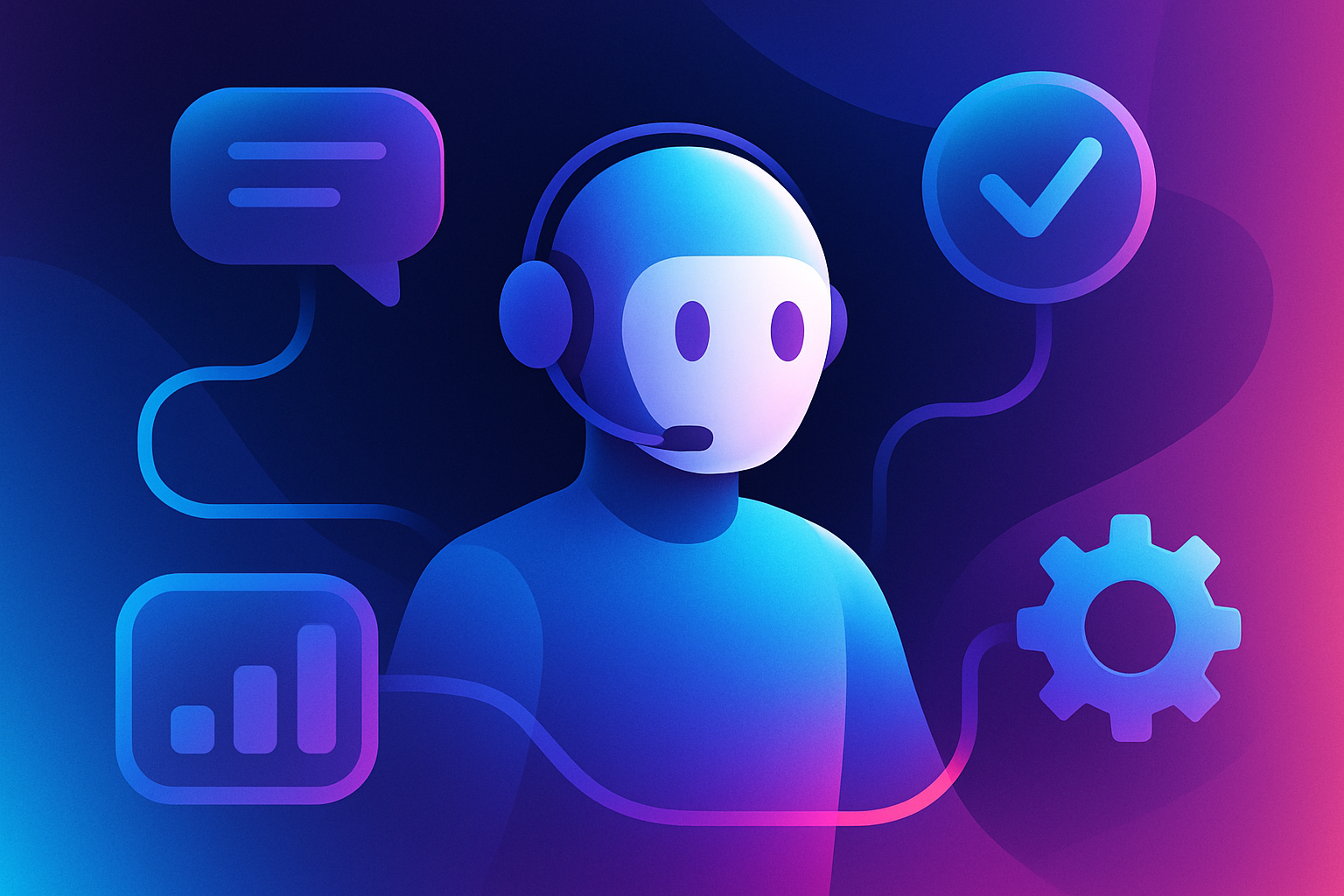
A chatbot answers questions. An agent gets things done. That shift — from responding to acting — is the most important trend in applied AI right now.
What makes something an "agent"?
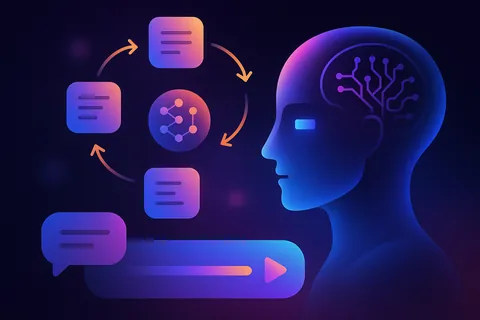
An AI agent is a model wrapped in a loop that lets it:
- Plan — break a goal into steps.
- Use tools — call a search engine, run code, query a database, send an email.
- Observe — read the result of each action.
- Adapt — decide the next step based on what happened.
Instead of producing one reply, the agent works toward a goal over many steps, correcting course as it goes.
A concrete example
Ask an agent to "find our three slowest-paying customers and draft polite reminder emails." It might:
- Query your billing database (tool use)
- Sort and identify the three accounts (reasoning)
- Look up each contact (tool use)
- Draft tailored emails (generation)
- Present them to you for approval (human in the loop)
No single prompt could do that. The loop is what makes it possible.
Tools are the superpower
A model on its own is frozen in time and can't affect the world. Give it tools and it can look up live information, do exact math with a calculator, and change real systems. The art of building good agents is largely the art of giving them the right tools and clear instructions on when to use them.
The guardrails question
Autonomy cuts both ways. An agent that can send emails can send the wrong email. Serious deployments add guardrails: permission checks, spending limits, and human approval for consequential actions. "Let the AI draft, let a human approve" is a common, sensible pattern.
Where this is heading
We're moving from tools you operate to teammates you delegate to. The near-term winners won't be fully autonomous systems running wild — they'll be well-scoped agents that handle repetitive multi-step work while keeping humans in command of the important decisions.