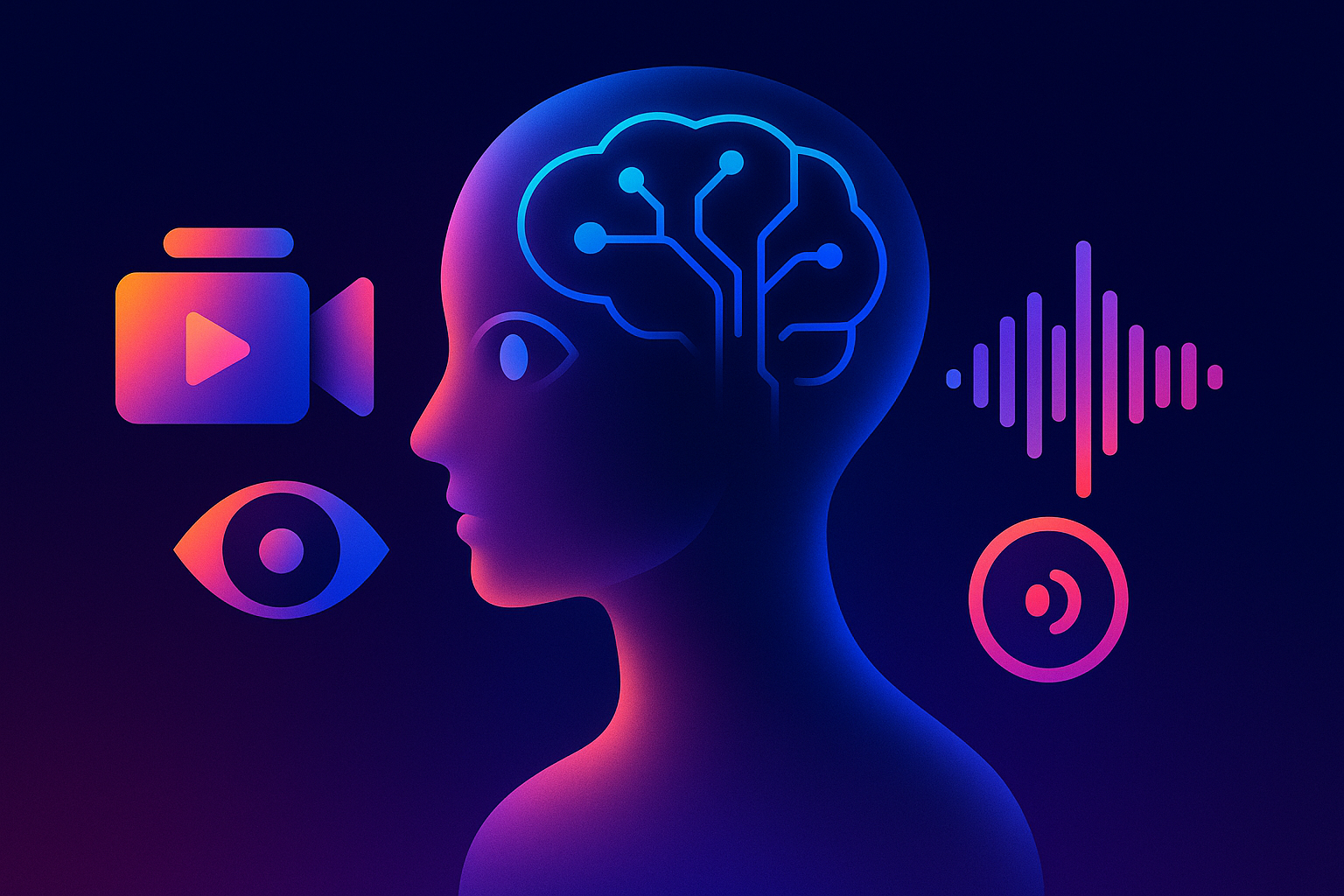
For years, AI progress was measured in text. Then models learned to see, hear, and combine senses. This shift to multimodal AI is quietly reshaping what these systems can do.
What "multimodal" means
A multimodal model can take in — and often produce — more than one type of data: text, images, audio, and video. Crucially, it reasons across them. Show it a photo of your fridge and ask what you can cook; it identifies the ingredients and suggests recipes.
Why this is a big deal
Most human tasks aren't purely textual. A doctor reads scans, a mechanic listens to an engine, a designer looks at layouts. By handling multiple modalities, AI moves closer to the way people actually work.
New applications unlocked
- Visual support: Point your camera at a broken appliance and get step-by-step repair help.
- Document understanding: Extract data from scanned invoices, forms, and handwritten notes.
- Accessibility: Real-time description of surroundings for people with low vision.
- Content creation: Generate a video storyboard from a script, or narration from an outline.
How it works, briefly
Under the hood, each modality is converted into the same kind of numerical representation the model uses for text. An image becomes a sequence of visual "tokens" that sit alongside word tokens, so attention can relate a caption to the pixels it describes. Train on huge sets of paired data — images with captions, videos with transcripts — and the model learns the connections.
The frontier: real-time and interactive
The newest systems handle streams, not just files. They can watch a live video feed, listen to a conversation, and respond in the moment. That turns AI from something you query into something you can collaborate with in real time.
What to watch
Multimodal capability raises the stakes on reliability and privacy — a model that can see and hear is powerful and sensitive. But the direction is clear: the interface to AI is becoming as rich as the world it's helping you navigate.