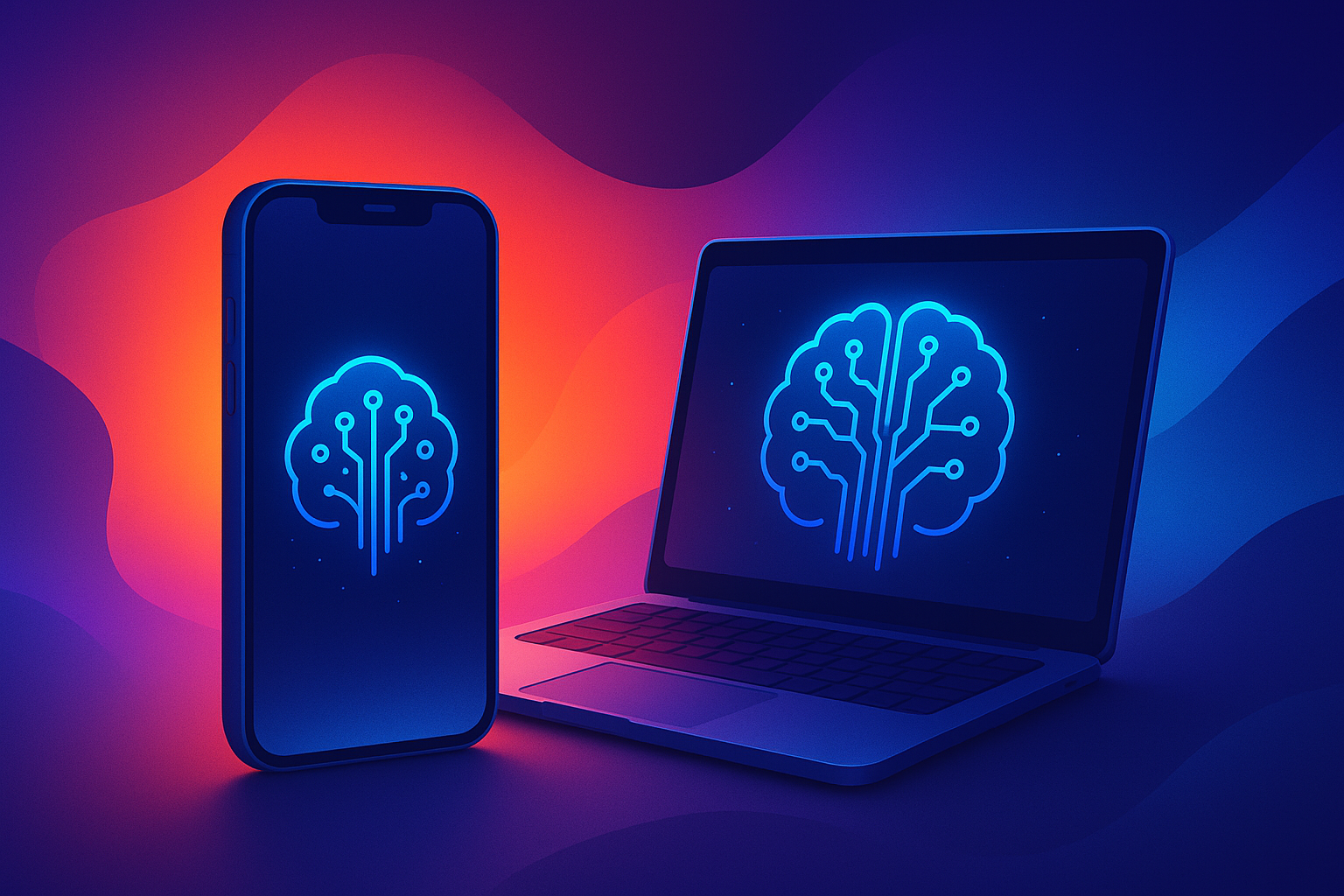
Most AI today runs in the cloud: your request travels to a data center, a giant model responds, and the answer comes back. That works, but it has costs — latency, privacy concerns, and a dependence on connectivity. A quieter revolution is changing that: on-device AI.
The shrinking model
Through techniques like distillation (training a small model to mimic a big one) and quantization (storing the model's numbers more compactly), researchers have made models that are a fraction of the size yet surprisingly capable. Models that once needed a server rack now run on a phone.
Why it matters
- Privacy: Your data never leaves your device. For health, finance, and personal notes, that's transformative.
- Speed: No round trip to a server means instant responses.
- Offline: Assistance on a plane, in a remote area, or during an outage.
- Cost: No per-request cloud bill for the basics.
The hybrid future
On-device models won't replace the giants in the cloud — they'll complement them. Expect a hybrid pattern: small local models handle quick, private, everyday tasks and only escalate to a large cloud model when a request truly needs the extra horsepower. Your device becomes the first responder; the cloud becomes the specialist.
What it means for builders
Designing for on-device AI means thinking about constraints again: memory, battery, and model size. But the payoff is products that feel instant and respect privacy by default — an increasingly powerful selling point.
The trajectory
Every year, the capability you can fit on a phone goes up. The assistant in your pocket is about to get a lot smarter — without sending your life to a server to do it.